




Fire Fighting Robots: Intelligent New Forces in Emergency Rescue
With the accelerated advancement of urbanization and the continuous expansion of industrial production scale, fire accidents have shown the characteristics of complex scenarios, diverse types, and high difficulty in extinguishing. Traditional fire rescue models face multiple challenges, including insufficient manpower, concentrated risks, and limited efficiency. As a high-end emergency equipment integrating mechanical engineering, artificial intelligence, sensing technology, and communication technology, fire fighting robots are gradually becoming a core component of the fire rescue system. They can replace firefighters to enter high-temperature, smoky, toxic, collapsed, and other dangerous areas to complete tasks such as fire detection, fire control, and fire extinguishing. This not only ensures the safety of rescuers but also greatly improves the accuracy and efficiency of fire fighting, serving as a key driver for promoting the intelligent and modern development of emergency rescue.
Fire fighting robots are a type of special mobile equipment that can be operated autonomously or remotely, with multiple functions such as fire detection, fire source localization, fire extinguishing, and environmental monitoring. Their core value lies in "high-risk substitution, precise operation, and continuous combat". Compared with traditional fire-fighting manpower, they are not restricted by extreme environments such as high temperatures, toxic gases, and explosions, and can operate continuously 24 hours a day, accurately adapting to the fire extinguishing needs of different fire scenarios. At the same time, their built-in intelligent systems can collect real-time fire data, providing a scientific basis for rescue command and realizing a closed-loop combat mode of "detection first, then extinguishing, and real-time monitoring and adjustment". This has completely changed the traditional fire-fighting operation logic of "relying on experience and manpower", making them indispensable "special combatants" in the modern fire rescue system.
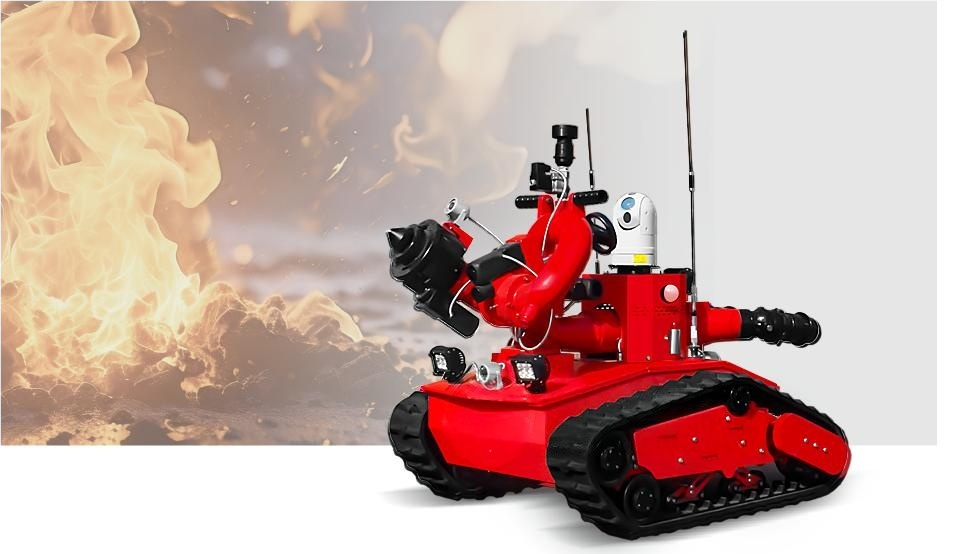
In terms of structural composition and core functions, fire fighting robots are composed of five core modules that work together to form a complete emergency rescue operation system.
The mobile chassis module is the "legs" of the robot, serving as the foundation for adapting to complex fire environments and achieving flexible mobility. According to differences in operation scenarios, fire fighting robots are mainly designed into three types: wheeled, tracked, and legged, to meet the needs of different terrains. Wheeled robots have a simple structure and fast movement speed, suitable for open areas such as urban streets, shopping malls, and office buildings. With a maximum speed of up to 20 km/h, they can quickly reach fire sites. Tracked fire fighting robots have excellent passability, adapting to complex terrains such as rugged roads, ruins, and steps, making them core equipment for mine rescue, old community fire rescue, and other scenarios. They can easily cross 30cm-high obstacles and 50cm-wide gullies. Legged robots (multi-legged) are based on bionic technology, imitating the walking mode of humans or animals, suitable for precision operation scenarios such as stair climbing and narrow passages. They can accurately climb stairs to the 3rd to 5th floor and enter the fire site for rescue operations.
All chassis adopt explosion-proof and high-temperature resistant designs, with fire-retardant materials for the body shell, which can withstand high-temperature combustion of more than 1000℃. Equipped with anti-slip tires and a stable suspension system, they ensure stable movement and prevent rollover in fire sites.
The sensing and recognition module is the "eyes" and "brain" of the robot, responsible for achieving full-dimensional monitoring and intelligent decision-making of the fire environment. This module integrates various equipment, including infrared thermal imagers, high-definition cameras, gas sensors, smoke concentration sensors, and temperature sensors, which can collect real-time core fire data. Infrared thermal imagers can penetrate thick smoke and fog to accurately capture the fire source location, temperature distribution, and fire spread direction, with a resolution of up to 640×512 pixels and the ability to identify temperature differences of 0.1℃. High-definition cameras are equipped with anti-shake and night vision functions, transmitting real-time fire images 24 hours a day, supporting 360° panoramic rotation and 10x optical zoom to clearly show the fire environment. Gas sensors can real-time detect the concentration of toxic and harmful gases such as carbon monoxide and hydrogen sulfide, automatically triggering an alarm when the concentration exceeds the safety threshold. Temperature sensors monitor the internal temperature of the building and the smoke distribution to avoid fire spread.
At the same time, the module is equipped with AI intelligent recognition technology, which can automatically identify the fire type and accurately spray fire-extinguishing media, reducing the waste of fire-extinguishing media and environmental pollution. The utilization rate of fire-extinguishing media is increased to more than 95%.
The fire extinguishing module is the "weapon" of the robot and the core executive unit for fire disposal. According to the fire-extinguishing medium and operation mode, it is mainly divided into four types: water-based, foam-based, dry powder-based, and composite. Water-based fire fighting robots use high-pressure water as the fire-extinguishing medium, equipped with large-capacity water tanks (500-2000L) and high-pressure water pumps, with a water jet pressure of up to 8-15MPa. They are suitable for fires of solid combustibles such as wood, cloth, and paper, with a wide fire-extinguishing range and significant cooling effect, which can quickly suppress the spread of fire.
Foam-based fire fighting robots generate foam by mixing foaming agent with water, suitable for extinguishing oil and chemical fires. The foam can cover the fire source to isolate oxygen and prevent re-ignition, with a foam jet distance of up to 30-50m. Dry powder-based fire fighting robots are equipped with dry powder storage tanks and can spray ABC dry powder, which is fast in fire extinguishing and widely applicable to initial fires such as electrical fires and flammable gas fires. Composite fire fighting robots integrate multiple fire-extinguishing media injection systems, which can switch operation modes with one click according to the fire type, adapting to fire extinguishing in multiple scenarios with strong flexibility and adaptability. In addition, some high-end robots are equipped with fire water cannons, which can spray fire-extinguishing media at a precise angle of ±180°, achieving "targeted elimination" of the fire source.
The control and communication module is the "nerve center" of the robot, responsible for realizing remote control, data transmission, and command issuance. The robot supports dual-mode communication: wired and wireless. Wireless communication adopts 4G/5G, WiFi, microwave, and other technologies, with a remote control distance of up to 1-5km. The signal has strong anti-interference ability, enabling stable data transmission in complex electromagnetic environments of fire sites. Wired communication is connected through special cables, suitable for short-distance and high-interference fire scenarios to ensure zero delay of commands.
The control terminal is equipped with a high-definition display screen and an operation handle, allowing firefighters to real-time view the fire scene images and equipment status in a safe area, and control all actions of the robot, such as movement, fire extinguishing, and data collection. At the same time, the module supports multi-machine collaboration and cloud data sharing. Multiple robots can work together to form a "three-dimensional rescue network", and data is synchronously uploaded to the fire command center to achieve unified scheduling and precise decision-making.
The auxiliary function module is the "support system" of the robot, further expanding its operation capacity and safety. It includes an emergency lighting module, which turns on strong light illumination in smoky environments to improve visibility; a voice broadcast module, which can transmit rescue instructions to trapped personnel and comfort their emotions; a rescue assistance module, equipped with small hydraulic rescue tools to clear obstacles and open rescue channels; a power supply module, adopting a dual-power supply mode of large-capacity lithium batteries and diesel generators, with a continuous operation time of 4-8 hours, meeting the needs of long-term fire duty and extinguishing; a self-protection module, which automatically starts the emergency evacuation procedure to quickly withdraw from dangerous areas when detecting that the fire temperature exceeds the safety threshold, the robot malfunctions, or encounters explosion impact, ensuring the safety of the equipment.
The application scenarios of fire fighting robots have covered urban fire protection, industrial emergency, mine rescue, chemical protection, and other fields, becoming a "hardcore force" for responding to various fire risks.
In urban high-rise building fire protection, traditional fire hoses are difficult to reach high-rise fire sources. Fire fighting robots can be lifted to the roof by aerial ladders, using water cannons to accurately spray high-rise fire sources, while real-time monitoring the internal temperature and smoke distribution of the building to avoid the spread of fire upward and prevent chain fires. In a fire in a high-rise office building in a certain city, the robot was lifted to the 80th floor, successfully suppressing the initial fire and gaining crucial time for firefighters to climb up for rescue, avoiding the escalation of the fire.
In chemical park fire disposal, chemical materials are flammable, explosive, toxic, and harmful, making manual entry extremely risky. With explosion-proof and corrosion-resistant designs, fire fighting robots can enter chemical storage tank areas and device areas to accurately extinguish oil and chemical fires, while monitoring the concentration of toxic gases to prevent secondary accidents. In a storage tank fire in a chemical park, foam-based fire fighting robots entered the vicinity of the storage tanks, continuously spraying foam to cover the fire source, and cooperating with water-based robots to cool down, successfully extinguishing the fire that had been burning for 3 hours without any personnel poisoning or explosion accidents.
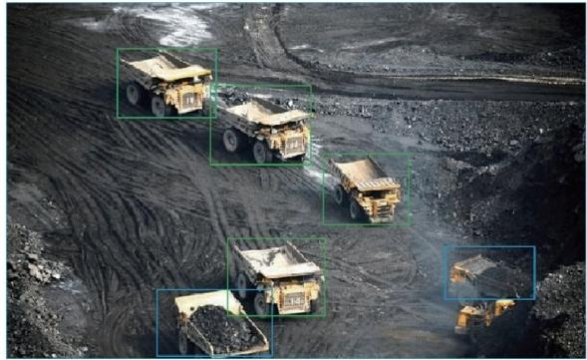
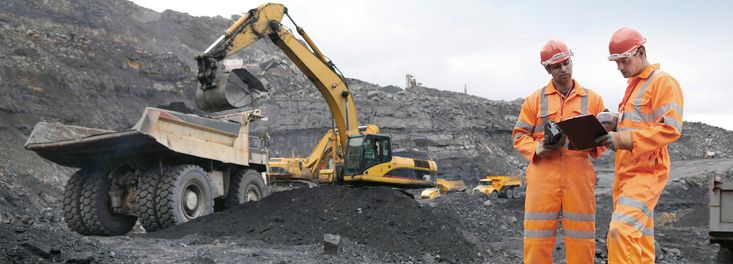
In mine and old community fire rescue, mine fires are mostly accompanied by dust and toxic gases, and old communities have narrow roads and complex terrain. Tracked fire fighting robots can easily cross mine ruins and community steps, enter the fire site to carry out detection and fire extinguishing, and check for potential collapse risks to ensure the safety of rescuers and trapped personnel. In a fire in an old community residential building, a legged robot climbed stairs to the 3rd floor, accurately located the fire source and sprayed dry powder, and guided trapped personnel to escape through the voice module, efficiently completing the fire extinguishing and rescue tasks.
Compared with traditional fire-fighting manpower, fire fighting robots have obvious advantages. In terms of safety, they completely replace firefighters to enter dangerous areas, minimizing the risk of casualties. According to statistics, in rescue sites equipped with fire fighting robots, the casualty rate of firefighters has decreased by more than 90%. In terms of efficiency, robots can operate continuously 24 hours a day, and the fire extinguishing speed is 3-5 times that of manual work, which can quickly control the spread of fire. In a large warehouse fire, the robot extinguished the initial fire in only 1 hour, avoiding millions of dollars in property losses. In terms of accuracy, AI intelligent recognition and precise spraying can reduce the waste of fire-extinguishing media, reduce environmental pollution, and the utilization rate of fire-extinguishing media is increased to more than 95%. In terms of data support, the real-time collected fire data provides a scientific basis for rescue command, making the fire fighting strategy more targeted and greatly improving the success rate of fire disposal.
With the continuous iteration of artificial intelligence, the Internet of Things, and bionic technology, fire fighting robots are developing towards intelligence, multi-functionality, lightweight, and collaboration. The in-depth integration of AI technology will enable robots to independently plan fire extinguishing paths, intelligently judge the fire type and automatically select fire extinguishing schemes, completing basic fire extinguishing tasks without manual control. Multi-functional design will integrate fire extinguishing, detection, rescue, demolition, and other functions, becoming an "all-round fire-fighting equipment". Lightweight technology will reduce the weight of robots, making them easier to carry and deploy, adapting to various small fire sites. Multi-machine collaboration technology will build a "robot cluster combat system", where multiple robots work together to form a three-dimensional network, achieving full coverage and precise disposal of complex fire sites.
As an important upgrade of emergency rescue equipment, fire fighting robots are not only an innovation in fire rescue technology but also a change in emergency rescue concepts. They empower traditional fire fighting with intelligent technology, solving the core problems of high-risk fire rescue and providing solid support for protecting people's lives and property safety and maintaining social stability. In the future, with the continuous breakthrough of technology and the continuous expansion of application scenarios, fire fighting robots will become the core force of the fire rescue system, promoting the emergency rescue cause to a higher level of intelligence and modernization.