




Global Development of Mining Robots
Global mining robots are moving from pilot demonstrations to large-scale application, becoming a core engine for safety, efficiency, and green transformation in the mining industry. In 2023, the global market size of mining robots reached approximately USD 1.28 billion, and is projected to hit USD 2.69 billion by 2031, with a compound annual growth rate (CAGR) of 9.8%. Meanwhile, the overall market for mining automation has exceeded USD 4.2 billion. Robots for inspection, transportation, tunneling, support, rescue, and other scenarios are being rapidly deployed, driving the industry from “reduced staffing” toward “unmanned operation”.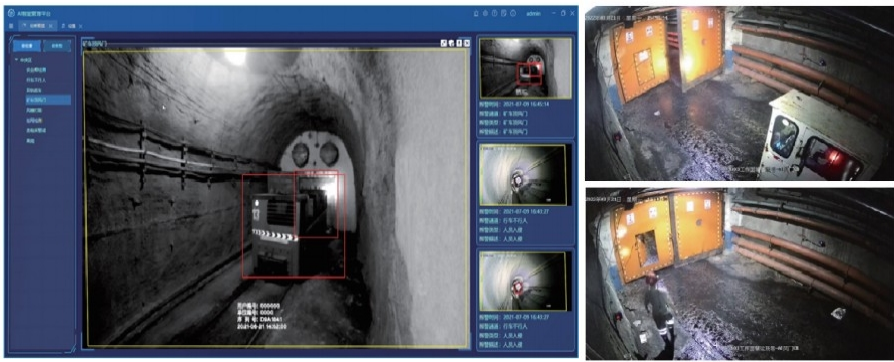
Safety imperatives and efficiency improvement are the core drivers. High-risk underground conditions such as gas leaks, roof collapses, and toxic dust, as well as heavy-duty transportation, extreme high and low temperatures in open-pit mines, have forced the industry to replace human labor with robots. At the same time, the global boom in new energy and infrastructure construction has driven surging demand for lithium, copper, iron, and other minerals. Labor shortages, rising costs, and the maturity of technologies including AI, 5G, multi-sensor fusion, explosion-proof and anti-vibration design have jointly promoted the large-scale application of robots. Supported by policies and capital, many countries have issued safety and intelligent standards. From 2023 to 2025, global financing for mining technology exceeded USD 12 billion, with 45% related to robotics. Giants such as BHP, Rio Tinto, and Vale have set unmanned operation rates as core targets for 2030.
Technologically, mining robots have formed a complete system of perception–decision–execution. Environmental perception relies on the fusion of LiDAR, vision, millimeter-wave radar, and inertial navigation, achieving centimeter-level positioning on unstructured roads. At the decision-making layer, AI and digital twins optimize path planning, scheduling, and maintenance. The execution layer adopts IP68 protection, intrinsically safe explosion-proof design, and high- and low-temperature resistance, adapting to extreme conditions from -40°C to 60°C.
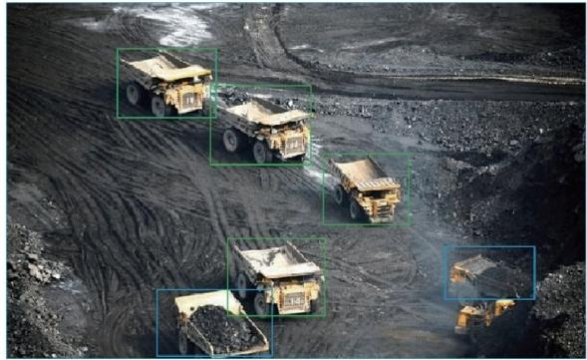
Mature product categories include autonomous mining trucks, intelligent drilling rigs, load-haul-dump (LHD) machines, inspection robots, bolting robots, and emergency rescue robots. Open-pit mines have achieved full-process unmanned operations covering drilling–blasting–hauling–dumping, while underground mines cover tunneling, support, transportation, inspection, and ventilation, greatly improving operational precision and continuity.
Regional development shows a pattern where Asia-Pacific leads, Europe and the US are advanced, and emerging markets follow. The Asia-Pacific region accounts for about 42% of the global market and is expected to rise to 48% by 2028. Australia is a benchmark for open-pit unmanned operations: Rio Tinto’s AutoHaul autonomous railway and BHP’s fleet of hundreds of autonomous mining trucks are in stable operation. The global inventory of autonomous mining trucks from Caterpillar and Komatsu exceeds 2,000 units.
China has caught up rapidly: by 2025, the number of deployed autonomous mining trucks exceeded 4,000, far exceeding the total overseas. Hundreds of robots operate in clusters in open-pit coal and metal mines. Underground tunneling, bolting, shotcreting, and inspection robots are widely used. Mines such as Shendong, Shaanxi Coal, and CHN Energy have reduced staff by 60%–75% and improved efficiency by 3–5 times, with technologies and standards beginning to be exported to Saudi Arabia, Australia, and other markets.
North America accounts for about 25% of the global market. More than 200 mines in the US and Canada have adopted automation, mainly in metal and oil sands mines, with widespread use of unmanned transportation, remote drilling rigs, and IoT monitoring. Quebec has introduced subsidies to push the automation rate to 60% by 2030. Europe boasts strong technological foundations: companies such as Sandvik and Epiroc are leaders in underground tunneling, rock drilling, and support robots, emphasizing explosion protection and energy efficiency to meet strict European safety and environmental requirements. The Middle East, Africa, and Latin America account for about 10%, with large mines in South Africa, Chile, Brazil, and other resource-rich countries taking the lead in introducing unmanned drilling rigs, mining trucks, and inspection systems, achieving remarkable cost reduction and efficiency gains.
Application scenarios have evolved from single-point breakthroughs to systematic collaboration. Open-pit mines, centered on unmanned trucks, unmanned drilling rigs, and remote electric shovels, realize 24-hour continuous operation, reducing transportation costs by 20%–30% and significantly lowering accident rates. Underground mines focus on replacing high-risk jobs: tunneling robots, bolting robots, auxiliary transport robots, and gas inspection robots replace manual labor. At Daliuta Mine of Shendong Coal, bolting operations have reduced staff by 75%; at Xiaobaodang Mine, inspection data is uploaded in real time, cutting response time from hours to seconds. In addition, mineral processing robots, tailings pond monitoring robots, and emergency rescue robots are rapidly expanding, covering the entire chain of exploration, mining, mineral processing, operation and maintenance, and rescue.
The competitive landscape is dominated by equipment giants with tech companies emerging as challengers. Caterpillar, Komatsu, Sandvik, Epiroc, and others occupy the high-end market with advantages in complete machines and channels. Chinese enterprises are rising rapidly in unmanned mining trucks and underground operation robots: XCMG, SANY, China Railway Equipment, CCTEG, and others have achieved mass production. Huawei, ZTE, and other firms enable unmanned operations through 5G and vehicle-road-cloud collaboration. Startups focus on segmented scenarios, with growing financing and delivery scales.
Clear future trends include:
- Greening: Battery-electric and hydrogen-powered unmanned mining trucks replacing diesel models to reduce carbon emissions.
- Clustering: Intelligent multi-machine collaboration, with single-mine fleets expanding to hundreds of units.
- Full-stack integration: Integrated “hardware + software + service” solutions becoming mainstream.
- Inclusiveness: Lower technology and cost thresholds, expanding penetration into small and medium-sized mines.
Overall, the global mining robot industry has entered a period of rapid growth, with continuously improving technological maturity, scenario coverage, and investment enthusiasm. It plays an irreplaceable role in ensuring safety, improving efficiency, and promoting low-carbon transformation, becoming a key pillar of high-quality development in the global mining industry.