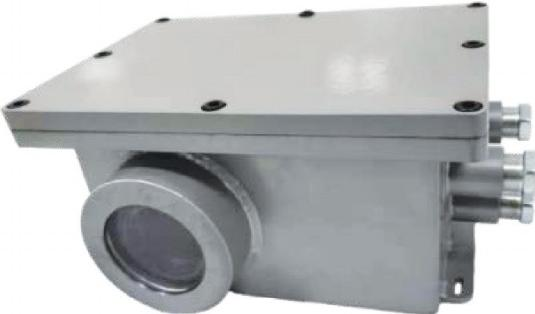
The main electrical performance is as follows:
- Rated working voltage: AC 127V
- Maximum working current: ≤1.0A
- Camera category: High-definition line-scanning camera, capable of automatically adjusting the rate according to the belt speed for image acquisition
- Trigger mode: Line trigger, Frame trigger, Line trigger + Frame trigger
- Image format: Black and white: Mono8/10/12/10Packed/12Packed
- Power output: Provides 1 safe 12V output for controlling the dust removal ball valve
- Communication interface: 2 Gigabit Ethernet ports, 2 Gigabit fiber optic ports
- Lighting: Special linear white light, brightness automatically adjustable
- Operating environment: Working temperature 0~50℃, storage temperature -30~70℃, 20%~95%RH without condensation
Exploration of the Function of the Surface Inspection Image Processor for Flameproof and Intrinsically Safe Type Belt
I. Power Management and Adaptation Function
![]()
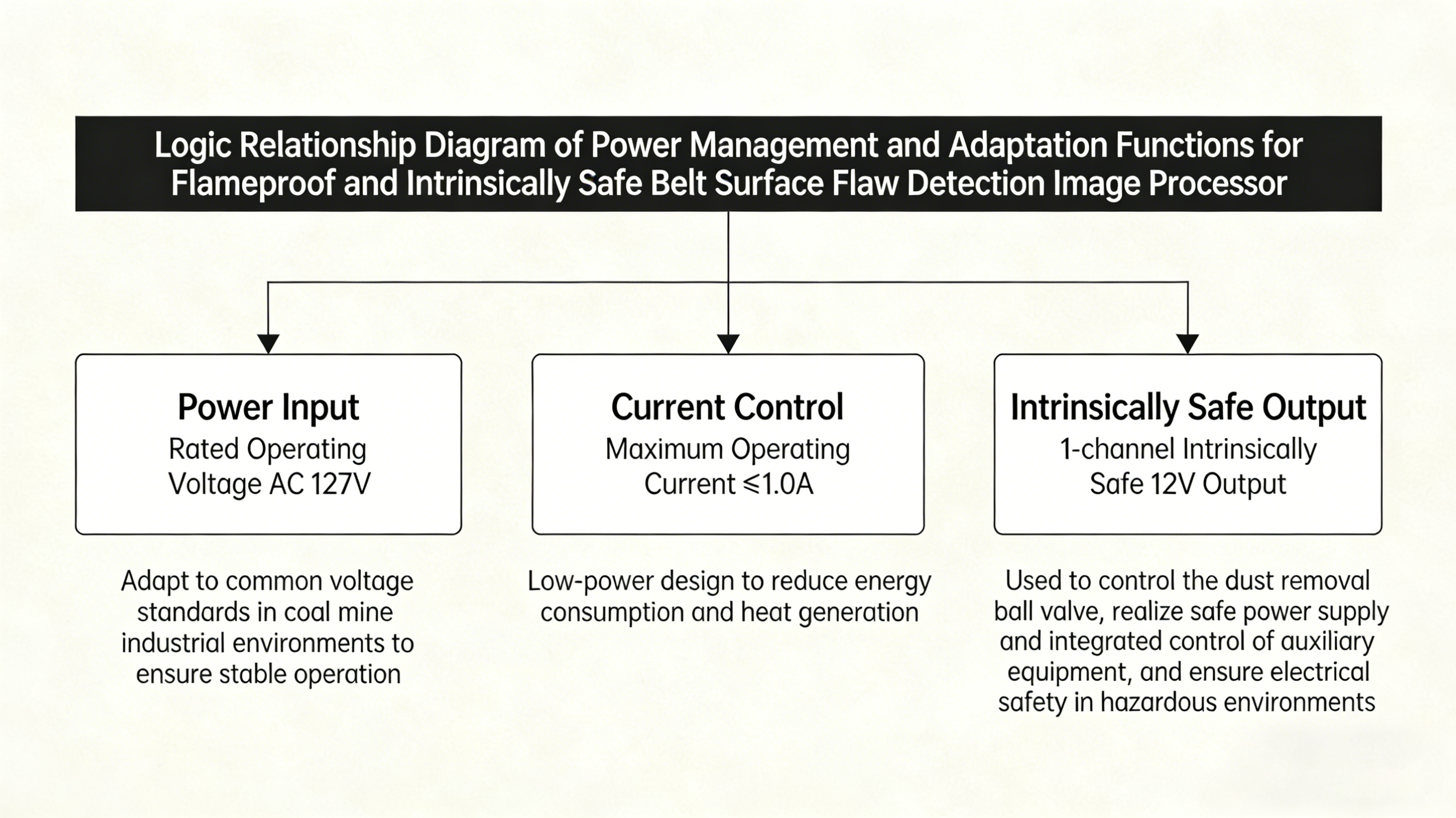
This image processor has stable management capabilities for power input and output. Its rated operating voltage is AC 127V, which can adapt to the common voltage standards used in specific industrial environments such as coal mines, ensuring the equipment operates stably under standard power supply conditions. The maximum operating current is ≤ 1.0A, demonstrating its low power consumption feature, which can effectively reduce energy consumption and minimize heat generation. At the same time, the device provides 1 safety 12V output, specifically for controlling the dust removal ball valve, achieving safe power supply and integrated control for auxiliary equipment, ensuring electrical safety in hazardous environments.
II. Core Functions of Image Acquisition and Processing
![]()
1. High-definition imaging and adaptive acquisition
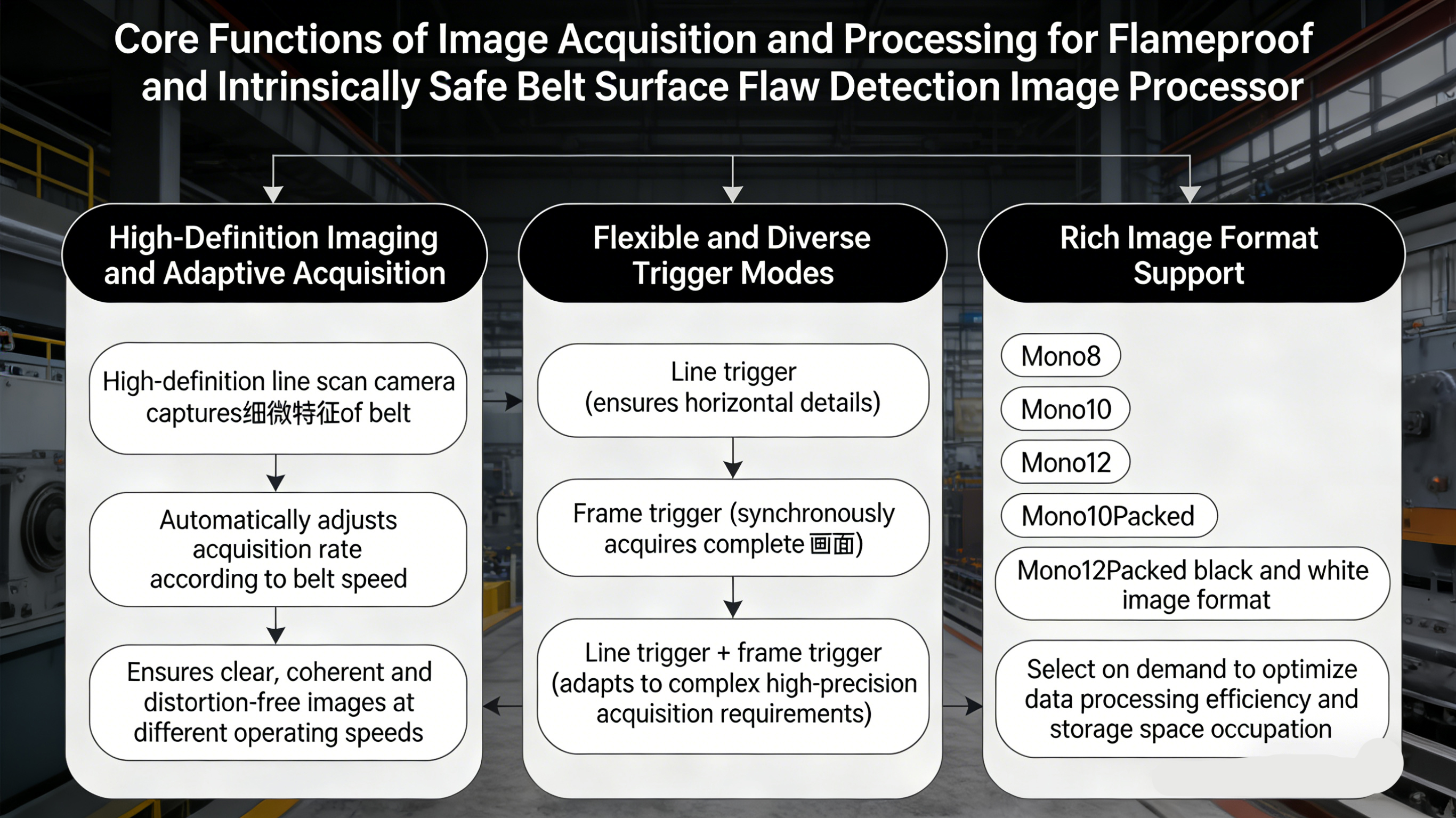
Equipped with a high-definition line-scanning camera as the core component for image acquisition, it can capture the fine features of the belt surface. The key lies in its ability to automatically adjust the rate according to the belt speed for image capture. This feature ensures that regardless of the belt's operating speed, clear, continuous, and distortion-free image data can be obtained, providing high-quality raw materials for subsequent flaw detection analysis.
2. Flexible and diverse trigger modes
Supports three trigger modes: line trigger, frame trigger, and line trigger + frame trigger. The line trigger mode is suitable for scenarios requiring precise row-by-row acquisition, ensuring the horizontal details of the image; the frame trigger mode is suitable for the need to synchronously capture the complete frame; and the combined mode of line trigger and frame trigger can meet more complex and higher-precision image acquisition requirements, enhancing the device's adaptability and flexibility in different working conditions.
3. Rich support for image formats
Provides multiple black-and-white image formats, including Mono8, Mono10, Mono12, Mono10Packed, and Mono12Packed. The support for different bit depths and packed formats enables the device to flexibly choose the appropriate image format based on actual detection requirements, data transmission, and storage conditions, optimizing data processing efficiency and storage space usage while ensuring image quality.
III. Auxiliary Lighting Function
![]()
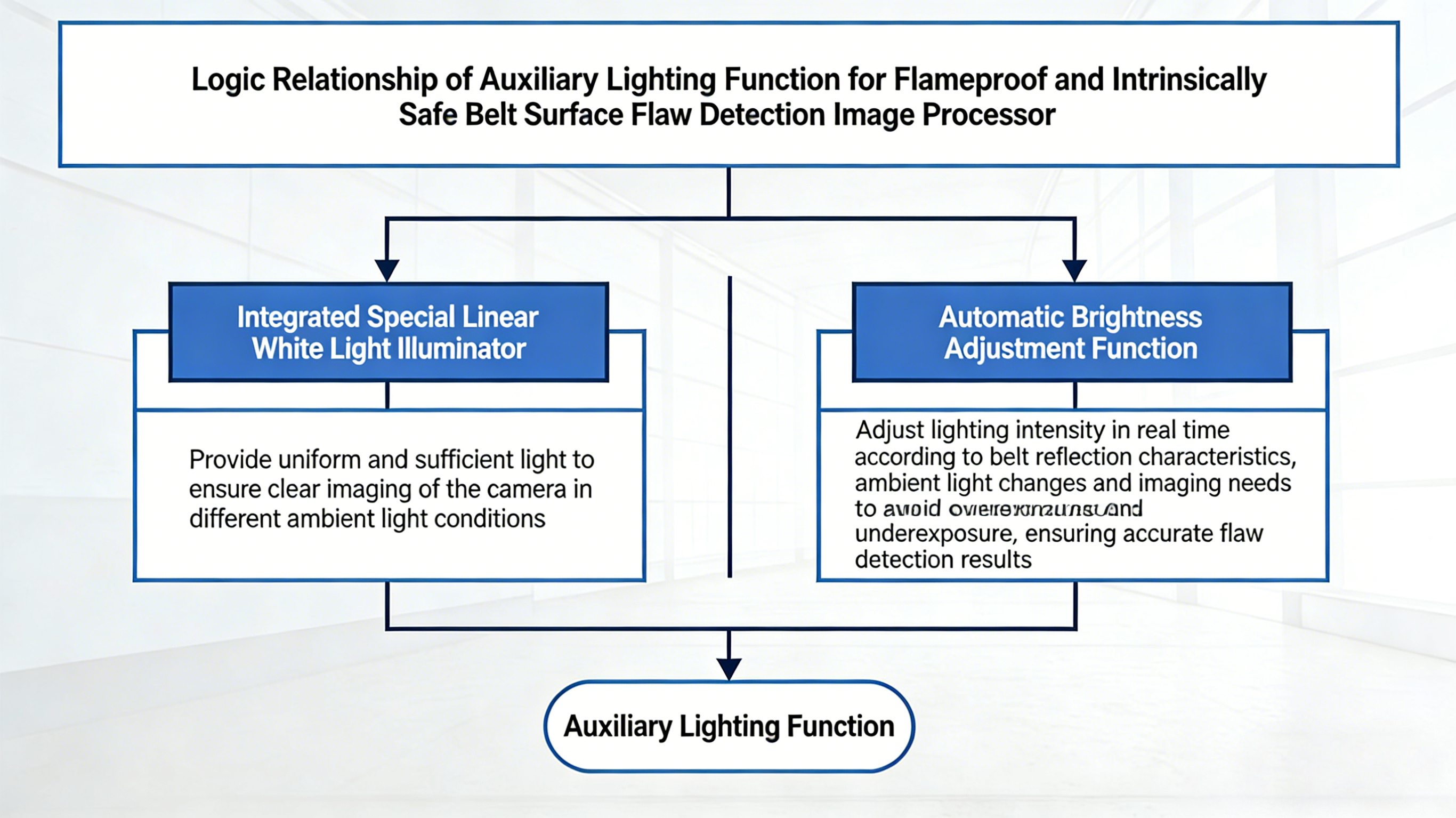
Integrates dedicated linear white light illumination lamps and is equipped with an automatic brightness adjustment function. Linear white light illumination can provide uniform and sufficient light to the belt surface, ensuring that the camera can capture clear images under different ambient light conditions. The automatic brightness adjustment function can adjust the illumination intensity in real time based on the reflective characteristics of the belt surface, changes in environmental light, and imaging requirements, avoiding overexposure or underexposure that may affect image quality, thereby ensuring the accuracy of the flaw detection results.
IV. Data Communication Function
![]()
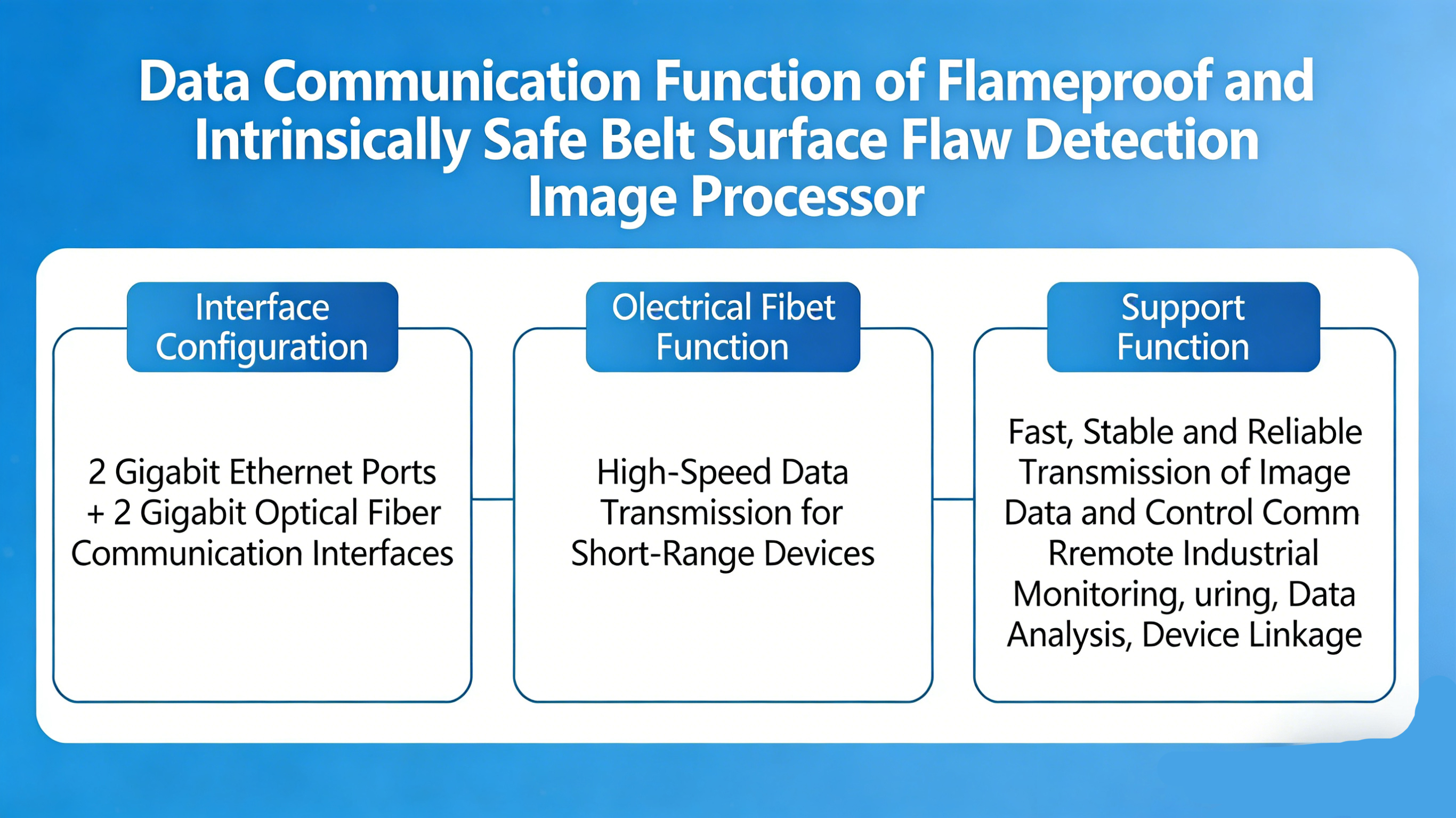
Equipped with powerful communication interfaces, including 2 gigabit Ethernet ports and 2 gigabit fiber optic ports. The gigabit Ethernet ports can achieve high-speed data transmission with nearby devices, while the gigabit fiber optic interface is suitable for long-distance and high-interference-resistant industrial environments, ensuring the rapid, stable and reliable transmission of image data and control instructions, providing a solid communication guarantee for remote monitoring, data analysis and equipment linkage.
V. Environmental Adaptation Function
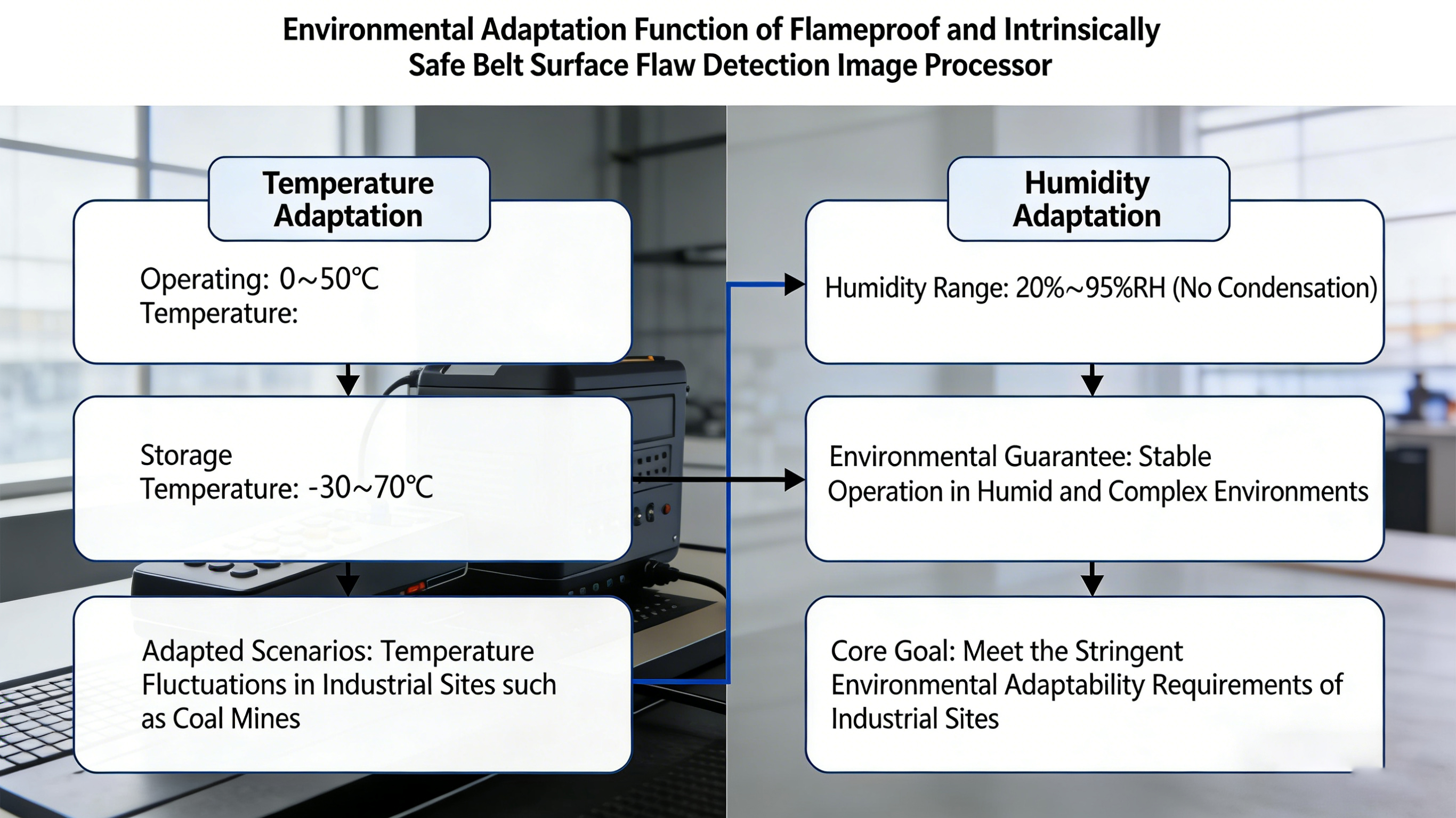
![]()
This image processor has excellent adaptability in terms of working environment. The operating temperature range is 0 to 50℃, and the storage temperature range is -30 to 70℃. It can adapt to the temperature fluctuations that may occur in industrial sites such as coal mines. At the same time, it can work normally in a humidity environment of 20% to 95% (without condensation), ensuring the stable operation of the equipment in complex environmental conditions such as humidity, and meeting the strict requirements for equipment environmental adaptability in industrial sites.